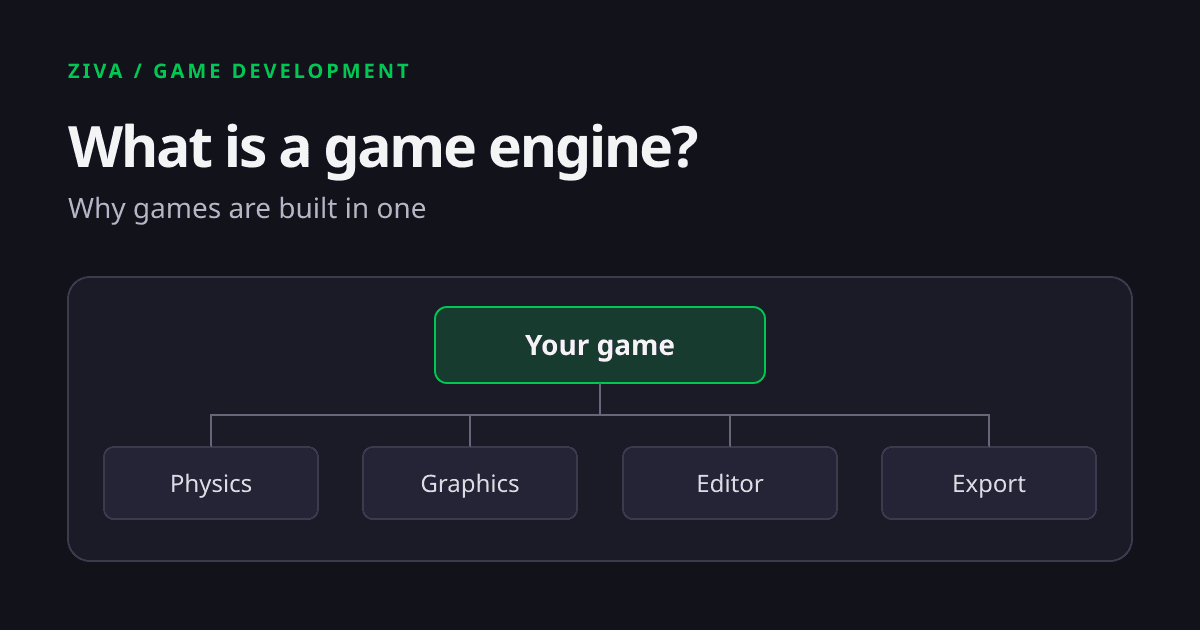
What is a game engine? Why games are built in one
Game engines such as Godot give people ready-made tools for building and running games.
In Video Game Insights’ Steam data , Unity, Unreal, Godot, and GameMaker together accounted for 42% of game releases in 2014 and 87% in 2024.
If you build a boat outside a shipyard, you first need to put up the scaffolding to support its hull. Once it’s finished, you still need a way to move it into the water. A shipyard already has that setup. A game engine provides the scaffolding for making a game.
Physics and collisions
An enemy should stop when it hits a wall. But drawing a wall on the screen doesn’t make that happen. The engine’s physics tools let the game maker mark the wall as solid, so the enemy bumps into it instead of walking through it.
Graphics and animation
An artist can import a 3D model and its animations . The engine handles drawing it on screen. Built-in particle systems create effects such as sparks and smoke, with versions that use the graphics chip to process many particles at once.
These are systems a team would otherwise have to build or connect themselves. Using an engine leaves more time to work on what makes the game fun.
Visual editor and custom controls
Here is a restaurant prototype in Godot, with the Ziva AI assistant added to the editor.
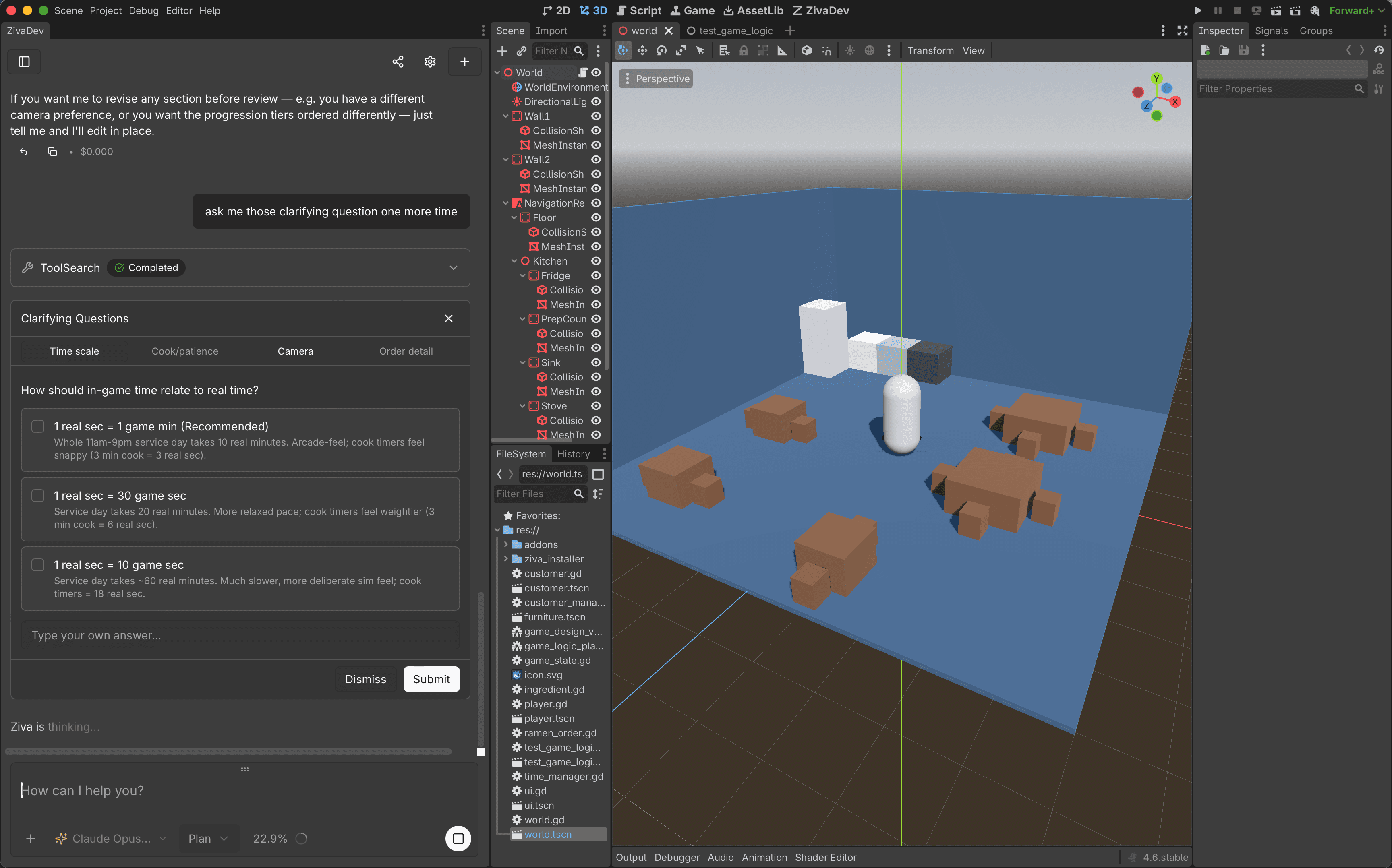
Open the full-size screenshot.
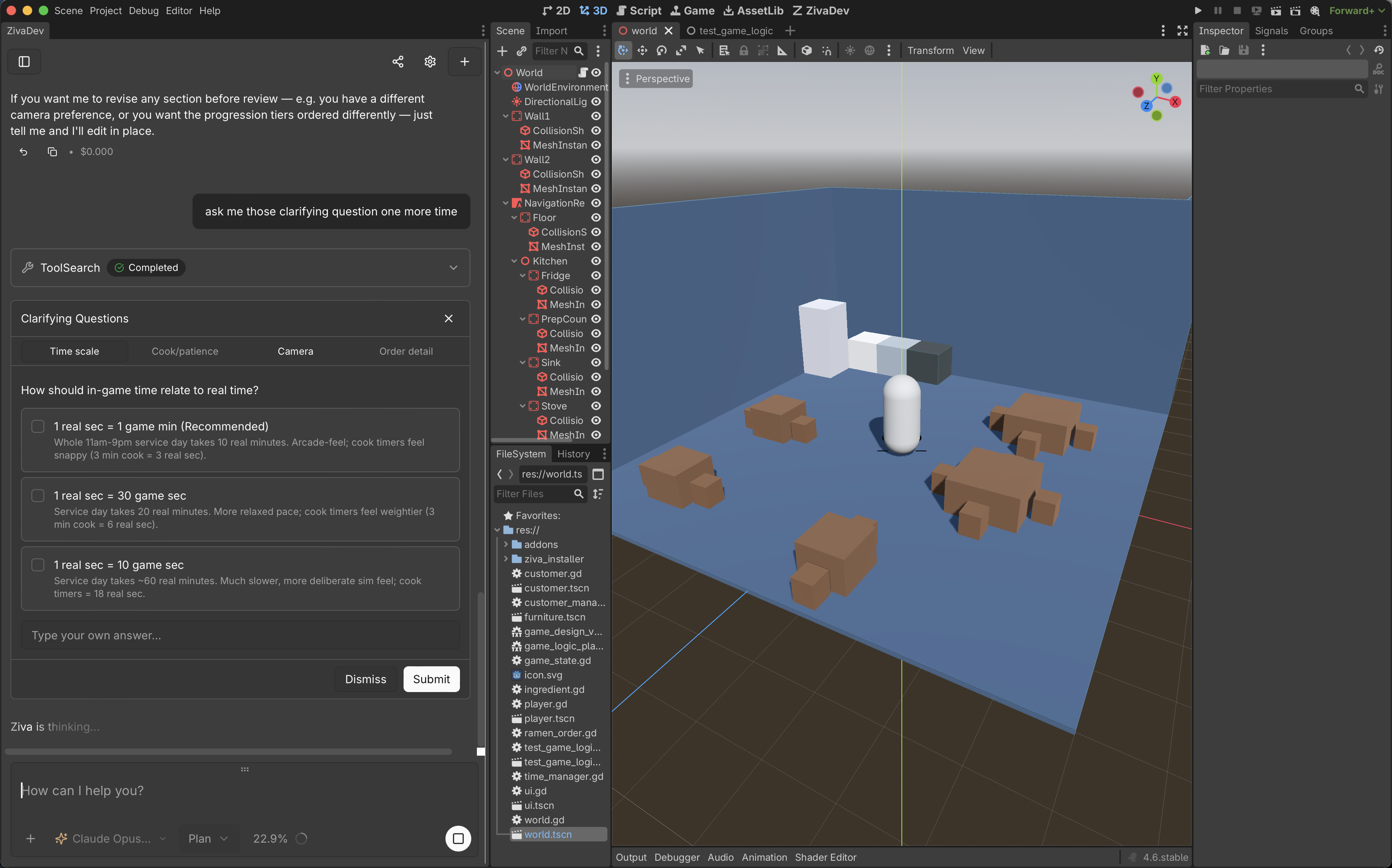
Reading the screen from left to right:
| Panel | What it is for |
|---|---|
| Ziva | Ask the AI assistant for help with the game. |
| Scene and FileSystem | Find objects in the world and files used by the project. |
| 3D workspace | Place tables, move walls, and arrange the room. |
| Inspector | Change a selected object’s settings. |
Godot’s editor lets people select objects and adjust them visually. A developer can also expose custom settings , such as how long a customer waits for food. A designer can change that value and try the game without editing the code.
That gives artists, designers, and developers a shared place to work. An artist can see a table in the room where players will encounter it; a designer can test whether the room feels too crowded.
Exporting to computers, phones, and the web
A boat still needs to reach the water. A finished game still needs to run on someone else’s device.
Game engines provide export tools that package a project for different platforms. Godot supports Windows, macOS, Linux, Android, iOS, and the web. The team still needs to test performance and adapt controls, but it shares much of the game’s code across those versions instead of rebuilding it for each device.
Reusable scenes and objects
An engine also helps organize a larger game. In Godot, reusable scenes can bundle an enemy’s appearance, movement, and collision shape into one piece. The team can place copies across several levels and update their shared behavior in one place.
AI can quickly write enough code for a small demo. As the game grows, someone still has to organize its parts, keep it running smoothly, and prepare it for release. Skipping the engine means taking on more of that work yourself.
Ziva brings AI into the engine, where it can work with the game’s objects and code together. The games made with Ziva show what that looks like in practice.